
Marriage unites two individuals into a couple, and pregnancy unites a couple into a family. Thus, pregnancy is the right stage to start taking care of family well-being. The family’s well-being of a pregnant woman can be viewed from physical and psychological perspectives. The activity that supports the physical and psychological perspectives of pregnancy well-being is Prenatal Yoga. It constitutes Hatha/gentle yoga and restorative yoga. Since prenatal yoga is milder than regular yoga, it differs completely from regular yoga.
A recommendation from a healthcare provider about prenatal yoga is always a required and safe choice. Prenatal yoga is beneficial to both of them who are going to be mother and infant when it is done safely and strictly under the guidance of a doctor trainer or prenatal yoga instructor or high quality, paid applications such as Ovia and Obie health because they only can give defensive tips like what movements to be avoided and what props to be used.
Prenatal yoga movements focus on labor and keeping the mother’s body active. It includes breathing exercises, slight stretching movements, and some relaxation methods. Practicing prenatal yoga boosts mindfulness and emotional bonding with the baby. Let’s see here some general, beneficial postures of prenatal yoga.
General Paternal Yoga Exercises
1. Warm-up/breathing exercise:
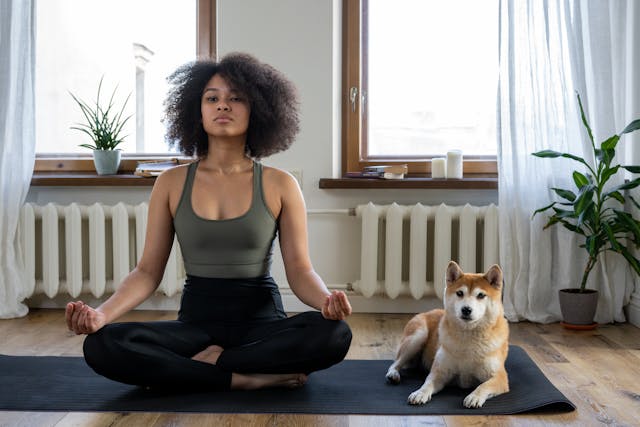
Sit cross-legged on a sofa or cushion, put your palms on your belly and inhale gently through your nose and exhale gently from your mouth for 2-3 minutes. You will feel more than comfortable.
2. Bound Angle Pose or Reclined Butterfly Pose or Baddha Kona Asana:
Firstly, sit on a yoga mat and extend your legs. Later, bring your two feet together as in the picture. It looks like how butterfly wings meet. Then hold your ankles and move your heels towards your body as far as you feel comfortable. This pose improves blood circulation, promotes fortitude and elasticity in the muscles that aid in childbirth. Using cushions under the knees gives comfort while doing this stance. You can do it for 5 breaths each as it is a hip-opening exercise.
3. Cat-Cow Stretch or Chakravaka Asana:
Initiate this stance slowly on hands and knees and inhale by dropping the belly and lifting the chest. This pose relieves the mother from pregnancy-related problems such as back pain, spinal and posture issues. It can also be done 5 times as a warm-up exercise by sitting, for one to two minutes each.
Trimester-wise Prenatal Yoga Exercises

4. Warrior II/Veera Bhadra Asana II:
Stand tall with straight back, step one foot back with one leg, bend the front knee, extend your arms like the left arm over the left leg and vice versa, and gaze over the hand that is in front of your face. This pose provides flexibility, strength and balance to your posture. It can be done in three to five breaths and 30 seconds on each side.
5. Side-Lying Sava Asana:
You can maintain your sleep hours by lying down on your left side with closed eyes and deep breathing for 2-10 minutes, as it makes you calm and relaxed. Using a pillow between your knees is a comforting suggestion for resting.
First Trimester- 1–12 weeks
The prenatal yoga poses that are appropriate for the first trimester are Sun salutations in a moderate way, ball/cushion-seated Cat-cow stretches (gentle bends using props), Reclined bound angle pose/Supta Baddha konasana, Janu seers asana, Forward bend pose (stretch without straining), Seated wide-angle forward bend (use props under knees to open hips). These poses support early pregnancy with ease.
Second Trimester- 13–27 weeks
The suitable prenatal yoga poses for the second trimester are wide-legged squats/Malasana, left side lying Savasana, Baddha Konasana, Supported-bridge pose, Triangle pose/Trikonasana (you can use a block for a small bend), Modified child’s pose (rest on a pillow with widened knees and forward belly). These poses effectively build strength and posture of a pregnant mother.
Third Trimester- 28th week to till Birth
The third trimester prenatal exercises are sitting or standing poses using props. For example, hip circles using a birthing ball, tender pelvic tilts, restorative poses using props, goddess pose/squat pose prepare you for labor and pelvic opening.
Bridge pose supported by a block or pillow, relieves pelvic pressure, and Side-lying savasana is the best stance for rest. These poses provide relaxation, reduce anxiety, and encourage your labor. There is a reduction in swelling due to perfect blood circulation when you stick your feet against the wall.
The well-being of a family begins with prenatal yoga, which strengthens the health of mother and baby. During pregnancy, avoid all the strong backbends, twists, and long periods of lying on your back. Furthermore, strictly refrain from hot yoga.
Prenatal yoga makes you accept and relate the changes in your body to the emotional connection of your baby. Nurture your body with prenatal yoga, fresh air, and take deep breaths for consciousness and freshness. Staying hydrated and listening to your body are evergreen, unspoken truths.