

You stretch. You’ve always stretched. And yet your hips still feel like they’re packed in concrete by Wednesday afternoon.
That disconnect is more common than people think. Most of us learned stretching from a gym class or a YouTube video — a generic hamstring pull here, a shoulder cross-body reach there — applied the same way regardless of what our bodies actually need. It’s not that stretching doesn’t work. It’s that a one-size-fits-all routine rarely targets the specific muscles, joints, and movement patterns that are actually holding you back.
That’s the gap assisted stretching is designed to close, and it’s worth understanding exactly how it works before you decide if it’s right for you.
What Assisted Stretching Actually Is?
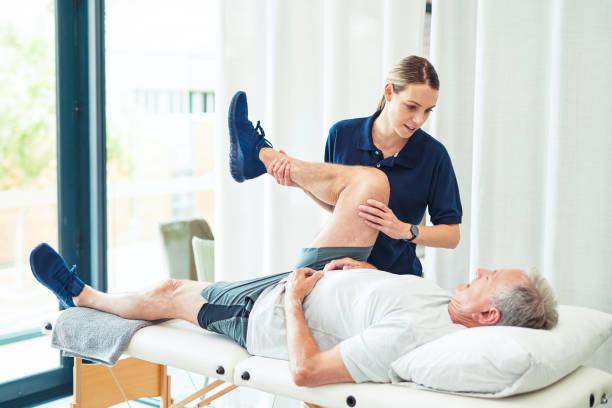
Assisted stretching is exactly what it sounds like: instead of stretching alone, a trained professional moves and stretches your body for you. You stay relaxed — often lying on a table — while the practitioner guides your limbs and joints through ranges of motion you likely can’t reach comfortably on your own.
This matters for a simple reason. When you stretch yourself, your muscles naturally guard against overextension. Your nervous system senses effort and tightens up as a protective response, which caps how far you can safely go. With assisted stretching, someone else is doing the moving, so your muscles can relax into the stretch instead of fighting it. That’s typically how people end up reaching a deeper, more effective stretch than they’d get solo.
It’s also more precise than static stretching. A practitioner can feel where tension is actually sitting — not just where you assume it is — and adjust the angle, pressure, and pace in real time based on how your body responds.
Where “Personalized” Comes In
Here’s where a lot of stretching advice falls short: it treats everyone’s body like it’s starting from the same place. But someone who sits at a desk eight hours a day has different tightness than someone who runs marathons or someone recovering from a knee replacement.
A personalized stretching program accounts for that. Instead of running through a fixed sequence, a good program is built around:
-
Your daily movement patterns
Sitting, driving, standing on concrete floors, repetitive lifting — each creates its own pattern of tightness. Someone at a desk all day tends to develop tight hip flexors and a stiff upper back. Someone on their feet constantly often deals with tight calves and a cranky lower back. The program should reflect which one you are.
-
Any injuries, surgeries, or limitations
This is the part that really separates a personalized approach from a generic one. If you’ve had a joint replacement, a sports injury, or you’re managing a chronic condition, the stretching needs to work around that safely — not push through it. A trained coach adjusts range of motion, pace, and pressure accordingly, and should always check in with you throughout the session about what feels right.
How your body responds session to session
Flexibility isn’t static. What’s tight this week might loosen up, and something new might tighten as your activity level changes. A program that’s actually personalized adapts over time instead of repeating the same routine indefinitely.
Who Tends to Benefit Most
Assisted stretching isn’t only for elite athletes, and it isn’t only for people in pain. It tends to help a fairly wide range of people, including:
- People who sit for long stretches at work and feel stiff by the end of the day
- Anyone dealing with tight hips, shoulders, or a nagging lower back
- Active people — runners, golfers, weekend athletes — who want to recover faster and move more freely
- Older adults focused on staying mobile and independent
- People coming off physical therapy who want to keep building on that progress
If you’re not sure which category you fall into, that’s fine. Part of the point of a personalized session is that the coach figures that out with you, rather than asking you to self-diagnose beforehand.
What Actually Happens During a Session
If you’ve never had an assisted stretch before, the format is simple and doesn’t require any preparation on your part.
- You get comfortable. Sessions are typically done lying on a padded table, in loose, comfortable clothing you can move in.
- Your coach checks in first. Before any stretching starts, expect questions about how you’re feeling, what feels tight, and anything you’d want them to know — old injuries, surgeries, areas to avoid or focus on.
- The stretching is guided, not forced. Your coach moves your limbs and joints through a range of motion, adjusting based on how your body responds. It should feel like a deep, effective stretch — not pain.
- You communicate throughout. A good session is a two-way conversation. If something feels too intense or not quite right, that feedback shapes the rest of the session.
- You leave, and notice the difference. Many people describe feeling looser and more at ease immediately afterward, though how long that feeling lasts varies from person to person and tends to build with consistency.
There’s no single right answer here — it depends on your goals and your body. Someone managing chronic tightness from years at a desk job might benefit from weekly sessions, at least at the start. Someone maintaining flexibility for a specific sport might do well with a session every couple of weeks. A good coach will talk through a realistic schedule with you rather than pushing a fixed package regardless of what you actually need.
Getting Started
If your current stretching routine isn’t cutting it, or you’ve never had a truly personalized approach to flexibility, assisted stretching is worth trying at least once. The biggest value isn’t the single session — it’s what a trained coach notices about your body that you’d never catch on your own, and how that shapes a program built specifically for you going forward.
